In this article
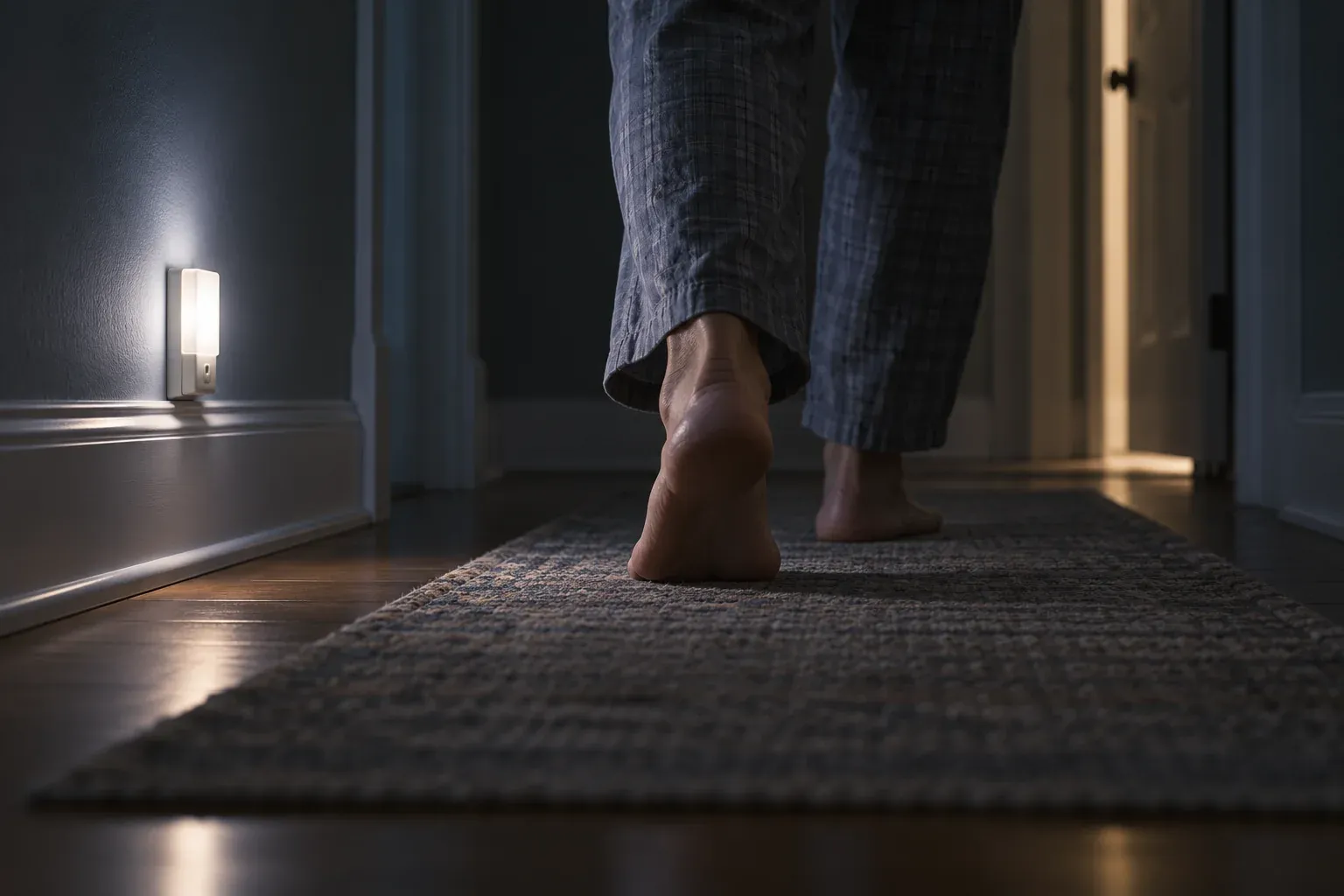
1 a.m., then 4 a.m., again
You’re not asleep long before the first trip. Back to bed, and the second one comes a few hours later, close enough to sunrise that there’s no real point trying for more sleep after. This has been going on for weeks, maybe longer, and you’ve started doing the math on it without meaning to: is this just what happens now, or is this my prostate.
That’s the actual question underneath the annoyance, even if you haven’t said it out loud. It deserves a real answer — not “everyone your age deals with this” and not a spiral into assuming the worst.
The reasonable first guess
For a man over 50, the first thing that comes to mind is usually an enlarged prostate — and that’s a reasonable guess, not a wrong one. The condition has a name — benign prostatic hyperplasia, or BPH — and it is, genuinely, extremely common. It affects an estimated 5% to 6% of men ages 40 to 64, and 29% to 33% of men 65 and older. It’s the most common prostate problem in men over 50 — worth being precise about: that’s a statement about how common BPH itself is, not a claim that it’s the single most common cause of nighttime urination specifically, which has its own longer list of real causes, covered next. Scientists don’t fully know why BPH happens. It’s linked to aging, and changes in hormone levels as you age may also play a role.
Mechanically, it’s straightforward: the prostate sits around the urethra, and as it grows, it narrows that passage. The bladder has to work harder to push urine through, which is part of why urgency, a weaker stream, and needing to go again soon after you just went are often part of the same picture as the nighttime trips.
Why “probably” isn’t “definitely”
Here’s the part that gets skipped in most casual advice: nighttime urination has a real, documented list of other causes, and some of them have nothing to do with your prostate at all. A urinary tract infection. An overactive bladder. Drinking alcohol or caffeine later than you realize. Diabetes that isn’t well controlled. Some medicines, such as diuretics.
None of that means you should start guessing which one applies to you. It means the honest, useful takeaway isn’t “it’s definitely BPH” — it’s “this has a specific, findable cause, and there’s a real way to find out which one.”
What’s actually worth doing tonight, and what isn’t
Two things that genuinely help, starting tonight: easing off alcohol and caffeine in the few hours before bed, and not drinking a large amount of fluid right before you turn in — not eliminating fluids generally, just shifting the timing. Staying physically active and making a habit of fully emptying your bladder each time, rather than rushing, both matter too.
What isn’t worth doing: deciding on your own, at 4 a.m., which specific condition this is and what to do about it. That’s a genuinely different kind of decision than “should I cut back on evening coffee,” and it isn’t one this article — or any article — is positioned to make for you.
When this stops being a middle-of-the-night annoyance
A specific set of signs means this needs attention now, not at your next routine checkup: being completely unable to urinate, pain or frequent urgent needs to urinate along with a fever or chills, blood in your urine, or real discomfort or pain in your lower abdomen. Any one of those is worth calling a doctor about the same day.
Short of that, if the nighttime trips are frequent, getting worse, or just genuinely disrupting your sleep, that’s still a real reason to bring it up at your next visit — not because something is necessarily wrong, but because there’s an actual answer available, and it isn’t one you can reach by lying awake doing math on it.
Where this goes next
Once you know it’s worth a conversation with a doctor, the next question is usually what’s actually driving the trips, and why the trip itself can’t tell you. That’s what Why Waking Up to Pee Isn’t a Prostate Test (and What Actually Drives It) walks through.
Sources
What backs the claims in this piece — see our editorial standards for how we research and source every article.